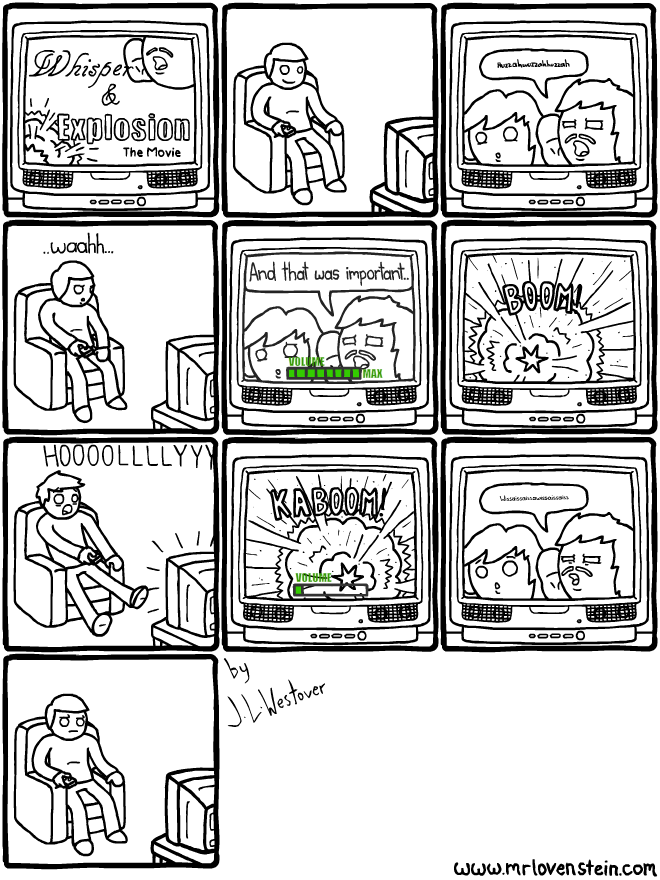
My Focus
Where did you go?
I could have sworn
you were here a minute ago.
I looked at my phone
to check a notification,
only for a minute.
Only when I looked up
—half an hour later—
did I realize you were gone.

Where did you go?
I could have sworn
you were here a minute ago.
I looked at my phone
to check a notification,
only for a minute.
Only when I looked up
—half an hour later—
did I realize you were gone.
This is an excellent overview of using the Web Animation API.
I meant to share this a month ago when I first saw it, but it came up again recently when I was making some animation improvements to a website I've been working on, so there's no time like the present.
I made some minor changes to the animateTo function included in the video for my own purposes, so the snippet I use is along the lines of:
function animateTo(element, keyframes, options) {
let cleanup = () => {};
return new Promise((resolve, reject) => {
try {
const animation = element.animate(keyframes, {
...options,
fill: "both",
signal: undefined,
});
const finish = () => {
try {
animation.commitStyles();
animation.cancel();
resolve();
} catch (e) {
// handle browsers that don't support `Animation.prototype.commitStyles`
reject(e);
}
};
animation.addEventListener("finish", finish);
// While the animation is not exposed through `animateTo`,
// animations can still be cancelled via the `signal` option,
// or when accessed from `Element.prototype.getAnimations`
const cancel = () => reject();
animation.addEventListener("cancel", cancel);
// Add support for AbortController
const signal = options.signal;
const abort = () => animation.cancel();
if (signal) {
signal.addEventListener("abort", abort);
}
cleanup = () => {
animation.removeEventListener("finish", finish);
animation.removeEventListener("cancel", cancel);
if (signal) {
signal.removeEventListener("abort", abort);
}
};
} catch (e) {
// handle older browsers that don't have `Element.prototype.animate`
reject(e);
}
}).finally(cleanup);
}
I meant to share this a couple months ago when I first read it. It's an excellent breakdown of some of the differences between software engineer levels and the type of work expected.
As a tangent, Bonnie Eisenman uses the following roles for the various different levels:
I like that Bonnie chose to label the various levels numerically. I prefer to use numeric levels when possible, as it helps to avoid some bias when someone switches to tech late in their career and takes on a "junior" role. Unfortunately there's no real standard for numeric levels.
My preferred labels are along the lines of:
Anyway, go read Bonnie's post.
Alex's "Do not get arrested challenge 2020" is the best thing I've read all week.
Somewhere around:
I called at least 30 phone numbers, to say nothing of The Emails. If you laid all the people I contacted end to end along the equator, they would die, and you would be arrested.
I laughed so hard I nearly fell out of my chair.
I understand that dealing with time is hard, but it would be nice to be able to include a time in a message and have it automatically convert from my local time to the local time of the person I'm sending the message to.
There is no form of protest against racism that is acceptable to racists.
I've seen James Hong's performances many times, but they only account for a tiny portion of his extraordinary number of roles.
I first started recognizing him after his voice acting for Covetous Shen in Diablo III. He really leaned into the rich texture of his voice for Shen, which made Shen stand out as particularly memorable to me. Every time James appears in a TV show or movie I'm watching, I think to myself "It's Covetous Shen!"
This will be a great tool if it gets standardized and implemented. I've had a few projects where heading and paragraph spacing were important for their design systems, and this would have come in handy rather than needing to rely on a handful of work-arounds and approximations.
One of the things that comes up pretty frequently in JavaScript are time spans. Animations, request timeouts, debounce delays, and throttles all need time spans to be specified. They come up quite frequently, but are—almost as often—inscrutable.
Don't believe me?
How long is 360000?
How about 3600000?
Did you have to count the number of zeros?
...and then do some mental math to try to figure out how much time is meant?
It's exactly these sorts of issues that lead to buggy behavior, where a 30 second timeout could turn into 3 seconds as easily as 5 minutes.
Fortunately there are a few techniques that can make time spans much easier to work with.